
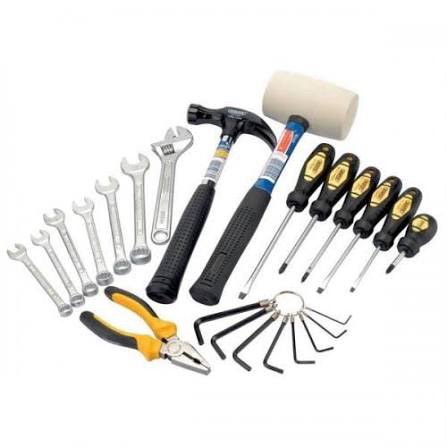
5 Tools Every DIYer Forgets When Assembling Furniture
You’ve got the Allen wrench that came in the box. Maybe a hammer. You figure that’s enough. Then 20 minutes in, you’re on your hands and knees trying to hand-tighten a bolt in a spot your fingers barely fit into.
The right tools make furniture assembly faster, easier, and less frustrating. Here are five that most DIYers overlook — and what happens when you don’t have them.
1. A Power Drill with a Screwdriver Bit Set
The tiny Allen wrench that comes with flat-pack furniture is designed to get the job done — not to do it comfortably. Hand-tightening dozens of bolts is slow, hard on your wrists, and often results in undertightened connections that cause wobbling later.
A cordless drill with the right bit set lets you drive screws and bolts in a fraction of the time. Just go slow on final tightening — over-torquing can strip the cam locks and dowels that hold flat-pack furniture together.
2. A Rubber Mallet
Dowels, cam locks, and snap-fit joints are meant to be tapped — not hammered. A regular hammer transfers too much force and can crack particle board or MDF panels on impact.
A rubber mallet gives you controlled force without damage. It’s especially useful for seating drawer bottoms, joining shelving panels, and fitting back panels into grooves without splitting them.
3. A Magnetic Wristband or Parts Tray
Lose one screw and you may not be able to finish the piece. Hardware bags from manufacturers contain the exact count needed — sometimes with no extras. A magnetic wristband keeps screws, bolts, and cam locks within reach while your hands are full holding panels in place.
No wristband? A muffin tin works surprisingly well — one compartment per hardware type keeps everything sorted and visible.
4. A Level
Furniture that looks straight during assembly often isn’t. A bookcase that’s even slightly off-level will cause doors to swing open or closed on their own, drawers that don’t sit flush, and shelves that make items slide to one side.
A small bubble level (or even a free level app on your phone) takes 10 seconds to check and can save you from disassembling and repositioning an entire piece after the fact.
5. Knee Pads or a Foam Mat
This one sounds minor until you’ve spent two hours on a hard floor. Most furniture assembly happens at ground level — laying out panels, connecting bases, installing drawer slides. Without cushioning, your knees and back take a beating that outlasts the job itself.
A simple foam kneeling pad or even a folded moving blanket makes a real difference, especially on tile or hardwood floors.
The Easier Option: Skip the Tool Hunt Entirely
Professional assemblers show up with everything needed — the right tools, the right bits, and the experience to use them efficiently. No trips to the hardware store, no improvising, no sore wrists.
Just Assemble Services covers Orlando, Kissimmee, St. Cloud, Davenport, and all of Central Florida. We handle everything from single pieces to full room setups.
Book your appointment today and let us bring the tools.
Leave a Reply